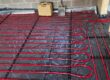

Even heat distribution is one of the main advantages of underfloor heating, but achieving this requires precision and expertise. Professional installers use a combination of careful planning, high-quality materials, and advanced techniques to ensure your system delivers consistent warmth across your space.
The process begins with the design stage. Installers calculate the heating load for each room, taking into account factors such as insulation, floor type, and room size. This ensures the system is tailored to the specific requirements of your property, preventing cold spots or excessive heating in any area.


For hydronic systems, pipe spacing is a critical factor. Installers lay pipes at even intervals, ensuring the entire floor is heated uniformly. They also use flow meters on the manifold to balance the system, ensuring each circuit receives the correct amount of hot water.
In electric systems, heating mats or cables are laid with consistent spacing to achieve uniform heat distribution. Installers carefully position these elements to avoid overlaps or gaps, which can lead to uneven heating.
Testing is another crucial step. After installation, installers use thermal imaging or other tools to verify that heat is distributed evenly across the floor. Any irregularities are addressed immediately, ensuring the system performs as intended.
Finally, installers provide guidance on system operation, including thermostat settings and zoning controls. By using these tools effectively, homeowners can maintain even heat distribution and enjoy maximum comfort.
With professional expertise, you can trust that your underfloor heating system will deliver consistent and efficient warmth throughout your home.